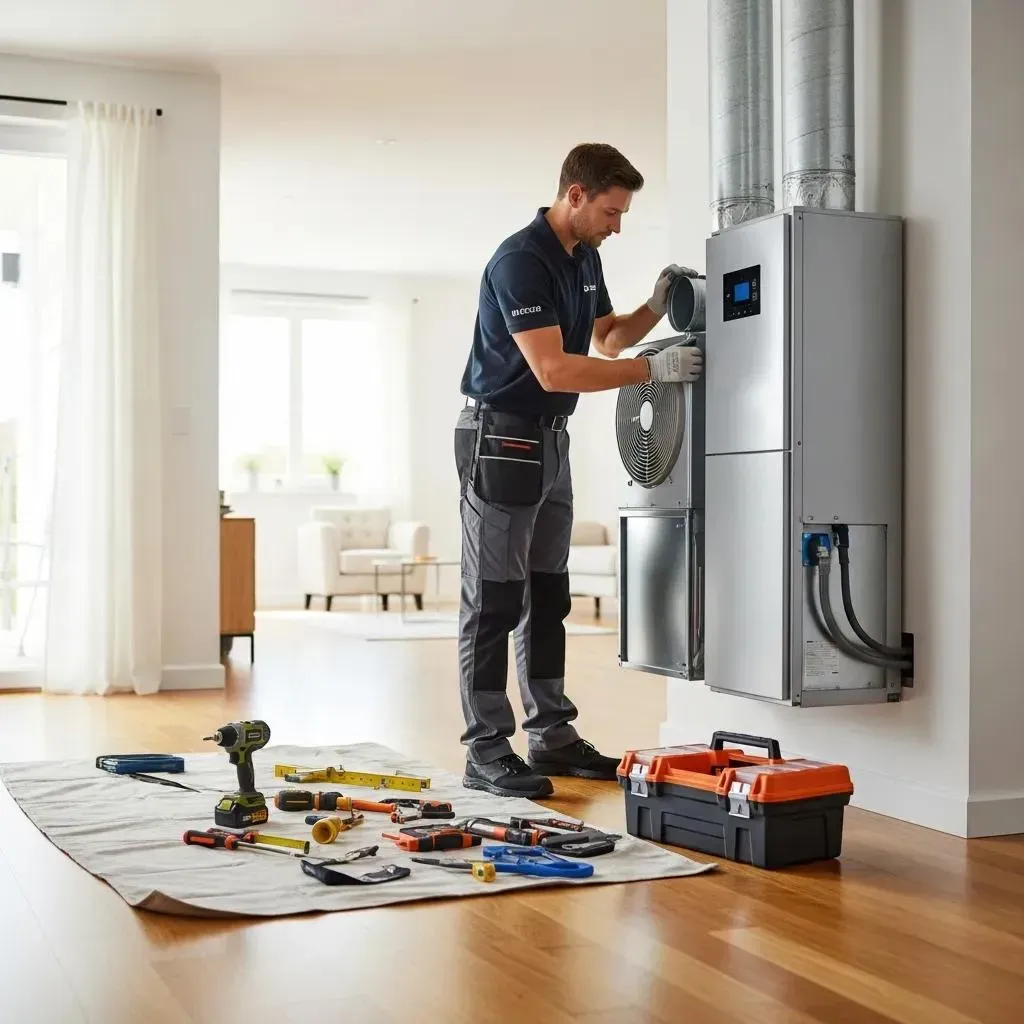
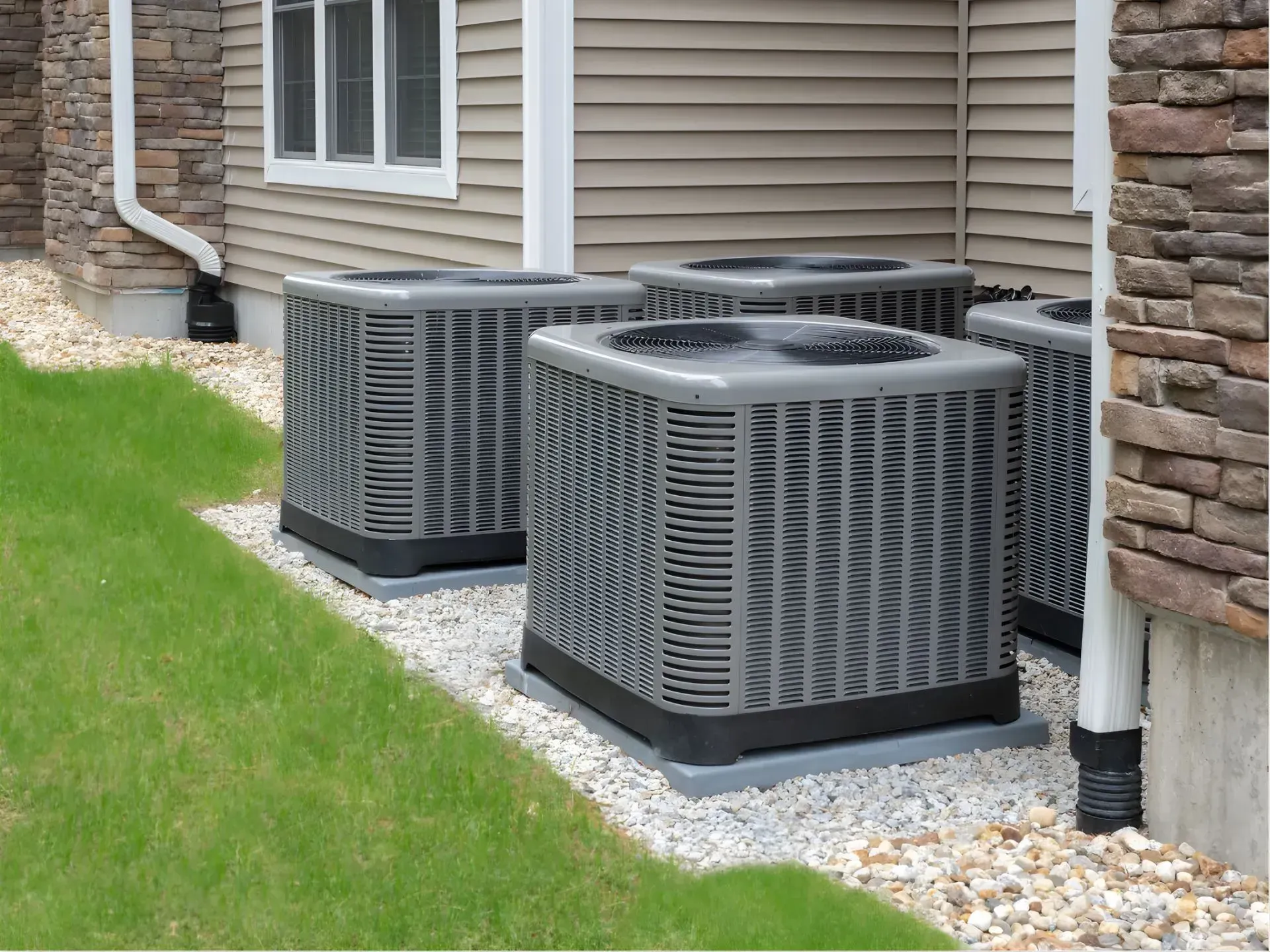
Choosing an HVAC contractor in Metro Detroit is not like choosing a plumber to fix a leaky faucet. A furnace or air conditioner installation is a 15–20 year decision that affects your home's comfort, safety, energy costs, and resale value. The wrong contractor — one who oversizes your equipment, skips critical steps, or disappears after installation — costs you far more than the difference in their bid price.
Metro Detroit has no shortage of HVAC companies. Some are excellent. Some are not. This guide gives you seven specific questions to ask any contractor before you sign a contract, along with what the right answers look like.
1. Are You Licensed and Insured in Michigan?
This is the baseline. Michigan requires HVAC contractors to hold a valid mechanical contractor's license issued by the Department of Licensing and Regulatory Affairs (LARA). Ask for the license number and verify it at Michigan's LARA contractor lookup. Do not accept "we're in the process of renewing" or "we work under a general contractor's license" as answers.
Insurance matters equally. A contractor working in your home should carry general liability insurance and workers' compensation coverage. If an uninsured technician is injured on your property, or if a faulty installation causes property damage, you could be financially exposed.
What the right answer looks like: The contractor provides their Michigan mechanical license number without hesitation and can supply a certificate of insurance on request.
2. Will You Perform a Manual J Load Calculation?
This is the single most revealing question on this list. A Manual J load calculation is the engineering standard for sizing residential HVAC equipment — it accounts for your home's insulation, window area, orientation, ceiling height, infiltration, and local climate data to determine exactly how much heating and cooling capacity your home needs.
Most HVAC contractors in Metro Detroit do not perform Manual J. They size equipment based on square footage rules of thumb or by matching the nameplate capacity of your existing system. The result is consistently oversized equipment that short-cycles, delivers poor comfort, wears prematurely, and costs more to operate than correctly sized equipment.
If a contractor cannot explain what Manual J is, or tells you square footage is sufficient, they are guessing with your money.
What the right answer looks like: The contractor confirms they perform Manual J on every installation and can show you the inputs and output of the calculation before equipment is selected.
3. What Brands Do You Install, and Why?
Every major HVAC manufacturer — Carrier, Trane, Lennox, Rheem, Bosch, and others — offers products ranging from entry-level to premium. A contractor who only installs one brand, or who cannot explain why they recommend a specific model over the alternatives, may be driven by dealer program incentives rather than your home's best interests.
For Metro Detroit specifically, ask about cold climate performance ratings for heat pump recommendations. A heat pump that performs well at 47°F (the standard HSPF2 rating temperature) may perform very differently at 5°F on a January morning. A technically credible contractor can discuss low-ambient performance data.
What the right answer looks like: The contractor recommends equipment based on your load calculation results and explains the trade-offs between tiers and models — not a single option presented as the only choice.
4. Do You Pull Permits for Your Work?
HVAC installations in Michigan generally require a mechanical permit, which triggers an inspection by your local building department. Permits exist to protect you — the inspection verifies that the installation meets code and was done correctly.
Contractors who skip permits do so to save time and avoid scrutiny. If you sell your home and the buyer's inspector discovers unpermitted HVAC work, you may be required to remediate it. Your homeowner's insurance may also deny claims related to unpermitted work.
What the right answer looks like: The contractor pulls permits as standard practice and includes the cost in their quote. They should be able to name the permit authority for your municipality.
5. What Does Your Warranty Cover — and Who Backs It?
Most HVAC equipment comes with a manufacturer's parts warranty — typically 5 to 10 years on major components, with some manufacturers offering lifetime heat exchanger warranties on qualifying equipment. But the manufacturer's warranty covers parts only. Labor is covered by the installing contractor's own workmanship warranty, which varies widely.
Ask specifically: How long is your workmanship warranty? What does it cover? If the heat pump fails to heat correctly because it was sized wrong or commissioned incorrectly, is that covered?
Some manufacturers also require equipment to be registered within a certain period after installation to activate the full warranty. Confirm the contractor registers your equipment.
What the right answer looks like: The contractor provides a clear written workmanship warranty (1–2 years minimum), explains what the manufacturer's parts warranty covers, and confirms they handle equipment registration.
6. Can You Provide References from Recent Local Jobs?
A contractor with a strong track record in Metro Detroit should be able to provide references from recent installations in your area — homeowners you can speak with about their experience. Online reviews on Google and other platforms provide useful signal, but direct references are more reliable.
Ask specifically about installations similar to yours in scope — a heat pump installation on an older home with existing ductwork, for example, or a dual-fuel system in a home similar in size to yours.
What the right answer looks like: The contractor provides references without hesitation and has a consistent record of recent Google reviews that mention technician quality, communication, and follow-through.
7. Do You Offer Emergency Service?
HVAC systems fail at the worst possible times — during the coldest nights of January and the hottest afternoons of July. Before you commit to a contractor for an installation, find out whether they provide emergency service for the systems they install.
A contractor who installs your furnace but cannot respond to an emergency call is less valuable than one who can support you through the system's entire service life. Ongoing service relationship matters.
What the right answer looks like: The contractor offers emergency service for existing customers and can tell you their response process for after-hours failures.
What This Looks Like at OnPoint HVAC
OnPoint HVAC is a licensed, family-owned HVAC contractor based in Livonia, Michigan. Licensed mechanical engineer George Petrentzev leads every installation with a Manual J load calculation, pulls permits as standard practice, installs equipment from multiple manufacturers based on performance data and load results, and backs every installation with a workmanship warranty.
We serve homeowners throughout
Metro Detroit — from
HVAC installation to
emergency repair — and we are available when your system needs attention, not just when you are signing a contract.
If you are evaluating HVAC contractors for a
new furnace,
heat pump, or any other HVAC project, we are happy to answer all seven questions above in detail. Call (248) 331-8090) or
request a free estimate.