Your furnace is making a noise it has never made before, or your air conditioner ran all night and never got the house below 78°F. The technician has given you a repair quote — and now you are wondering whether it makes more sense to fix what you have or replace the whole system.
It is one of the most common questions OnPoint HVAC fields, and it does not have a universal answer. The right decision depends on your system's age, the nature of the failure, the overall condition of the equipment, and a straightforward comparison of what you will spend either way. This guide walks you through the framework our licensed mechanical engineer George Petrentzev uses when evaluating this decision for Metro Detroit homeowners.
The 50% Rule: Where to Start
The most widely used decision framework in the HVAC industry is the 50% Rule: if the cost of a repair exceeds 50% of the cost of a full replacement, and the system is more than 10 years old, replacement is almost always the better financial decision.
The logic is straightforward. An aging system that requires a major repair is not just spending money on that one component — it is spending money on equipment that will likely require additional repairs in the coming years as other age-worn components fail. You are effectively paying a large sum to extend the life of a system on a downward trajectory.
That said, the 50% Rule is a starting point, not a complete answer. Here is what else factors in.
Age: The Most Important Variable
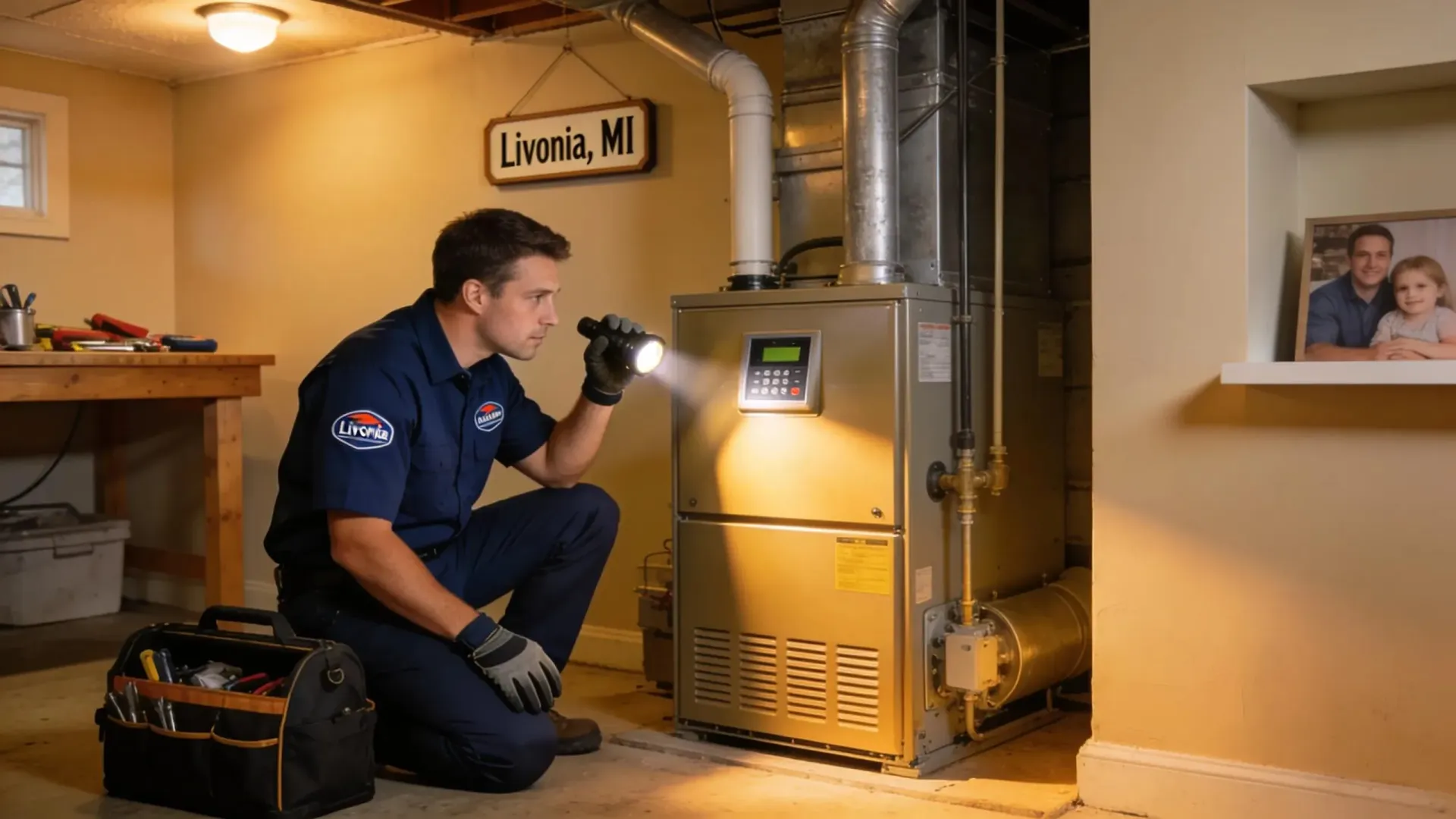
Furnaces are typically rated for 15–20 years of service life in a Michigan climate, where heavy run hours and thermal cycling accelerate wear. A 10-year-old furnace with a failed capacitor is a clear repair candidate. A 17-year-old furnace with a cracked heat exchanger is a strong replacement candidate — because the heat exchanger is the most expensive component to replace, and a 17-year-old system has limited remaining service life regardless.
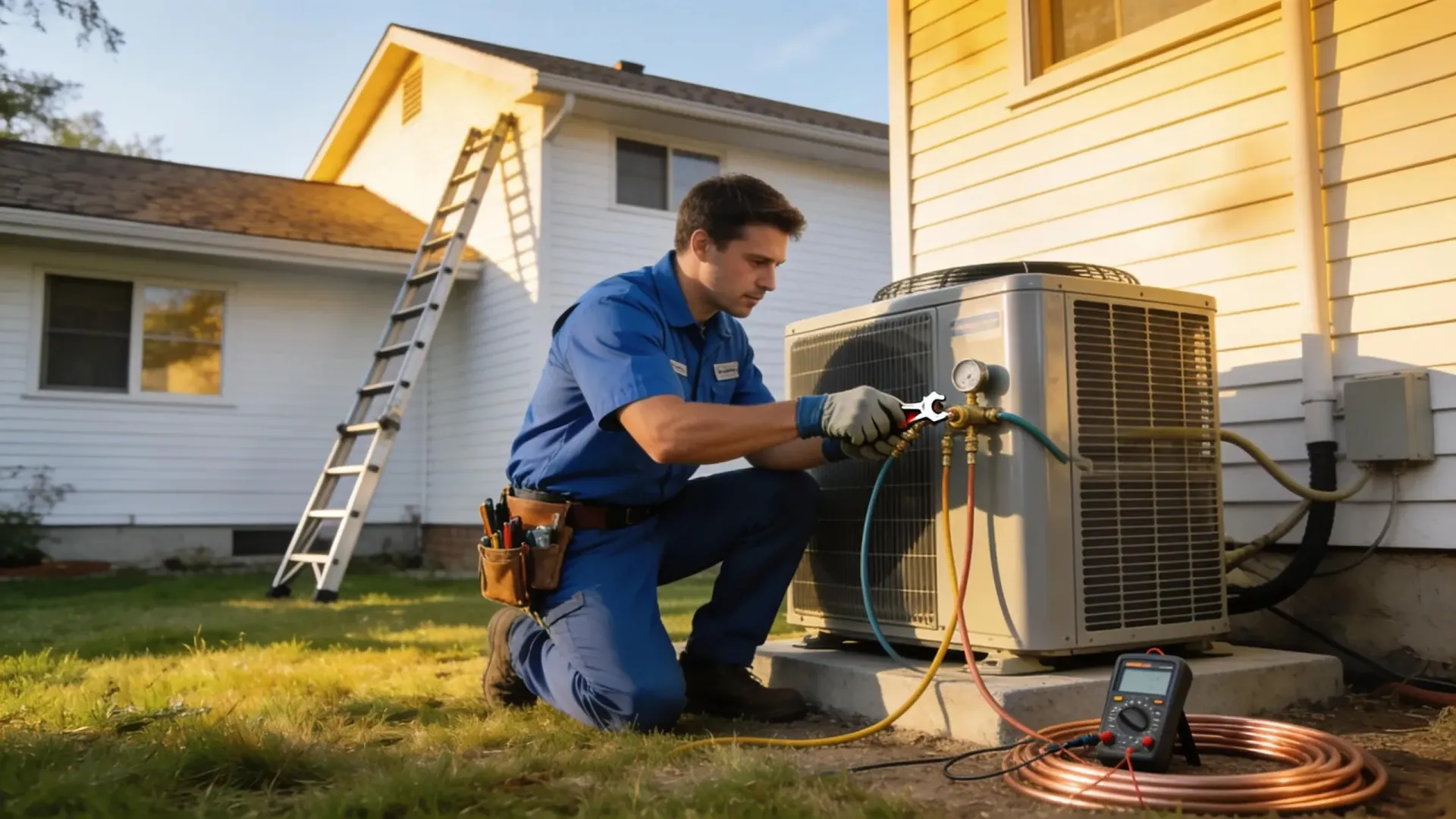
Air conditioners and heat pumps typically last 12–17 years with proper maintenance. A compressor failure on a 14-year-old system with R-22 refrigerant (phased out and now expensive to service) is almost always a replacement scenario. The same failure on a 6-year-old system with a valid manufacturer warranty is a clear repair.
The rule of thumb: The older the system, the lower the repair cost threshold that justifies replacement. A repair that is sensible on a 5-year-old system may not be sensible on a 15-year-old one.
What Failed: Not All Repairs Are Equal
Some components fail frequently and are inexpensive to replace. Others signal that the system is approaching the end of its viable life.
Repairs that are almost always worth doing regardless of system age:
- Capacitor replacement ($150–$350)
- Thermostat or control board replacement
- Igniter replacement
- Contactor replacement
- Filter or coil cleaning
Repairs that require an age-based decision:
- Blower motor replacement ($400–$800) — worth it on a system under 10 years old; evaluate carefully on older equipment
- Evaporator or condenser coil replacement ($800–$2,000+) — major investment; factor in system age and refrigerant type
- Refrigerant leak repair with recharge ($400–$1,500+) — assess whether the system uses phased-out refrigerant and overall equipment condition
Repairs that almost always justify replacement on systems older than 10–12 years:
- Heat exchanger replacement (furnace) — typically $1,500–$3,500; nearly always exceeds 50% of replacement cost
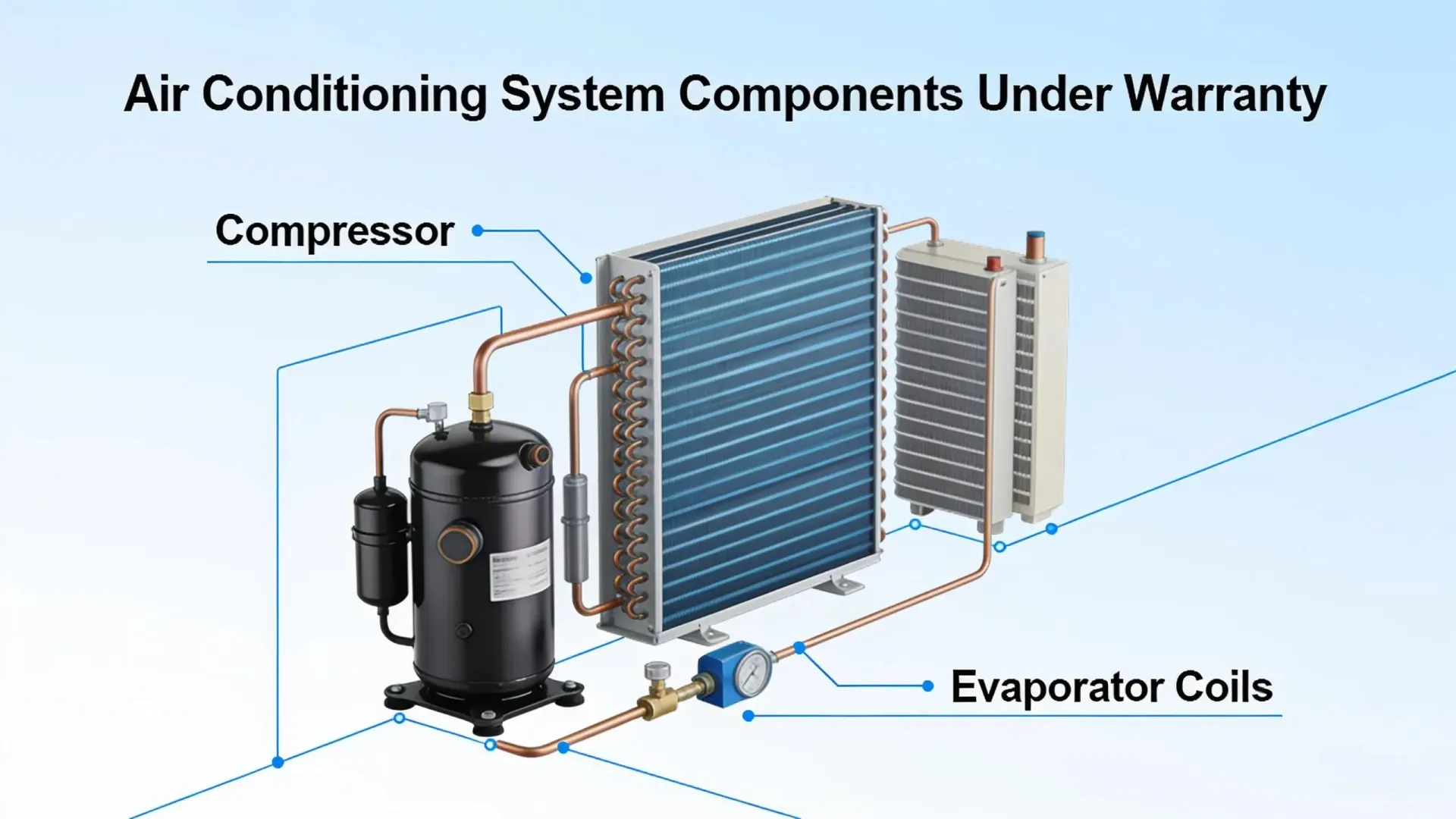
- Compressor replacement (AC/heat pump) — typically $1,200–$2,500+ for the part alone; close to or exceeding replacement cost in most cases
Efficiency: The Hidden Factor in the Calculation
Most Metro Detroit homeowners focus on repair cost vs. replacement cost and stop there. What the calculation often misses is the ongoing operating cost difference between aging equipment and a modern replacement.
A furnace operating at 80% AFUE wastes 20 cents of every dollar of gas consumed. A modern 96% AFUE unit wastes less than 4 cents. For a Metro Detroit home spending $1,200/year on heating, that efficiency gap is worth roughly $192/year in fuel savings — which contributes meaningfully to the payback period on a new system.
Similarly, replacing a 10 SEER air conditioner with an 18 SEER unit can cut summer cooling costs nearly in half. When OnPoint HVAC evaluates a repair vs. replace decision, we factor in estimated annual operating cost savings alongside the capital cost comparison. It is the only way to make a fully informed decision.
Signs Your System Is Telling You It Is Time
Beyond the specific failure requiring repair, these broader symptoms suggest a system that is declining overall:
- Increasing repair frequency. One repair per year is a maintenance cost. Two or three is a pattern of cascading failure.
- Climbing utility bills without a change in usage or rates — suggesting declining combustion or mechanical efficiency.
- Uneven comfort throughout the house — rooms that used to be comfortable becoming harder to heat or cool.
- The system runs constantly to maintain setpoint temperature, suggesting it can no longer keep up with your home's load.
- It uses R-22 refrigerant. R-22 was phased out of production and supplies are now expensive. A system requiring R-22 recharge is one refrigerant leak away from a replacement decision made under pressure.
What to Ask Your HVAC Contractor
Before committing to either path, ask for both numbers — the repair cost and the full replacement cost — in writing. A contractor who only quotes the repair, or who pushes immediately to replacement without a proper diagnostic, is not giving you the information you need to make a sound decision.
At OnPoint HVAC, we provide both numbers every time we evaluate an aging system. We explain what failed, why, what it costs to fix, what a properly sized replacement would cost, and our honest engineering assessment of which investment makes more sense for your home. There is no commission pressure either way.
When You Decide to Replace: Size It Right
If the decision points toward replacement, insist on a proper Manual J load calculation before any equipment is selected. An oversized furnace or air conditioner — far more common than most homeowners realize — short-cycles, wears prematurely, and delivers inconsistent comfort. You will be having this same conversation again in 10 years instead of 18.
OnPoint HVAC performs Manual J calculations on every replacement. It is not an add-on — it is the baseline for doing the work right.
Ready for a straight answer on your system? Call OnPoint HVAC at (248) 331-8090 or
request a diagnostic. We serve homeowners throughout
Metro Detroit with honest evaluations — you will get the
furnace repair cost and the
AC repair cost alongside full replacement pricing so you can decide with complete information